
Phonics and Early Reading
Introduction
Every child deserves success right from the start. At St Ann's, we believe every child can open doors to new worlds through reading. Reading is the golden thread that weaves through every part of our learning. We are committed to nurturing confident, passionate readers. That is why reading is at the heart of everything we do at St. Ann’s RC Primary School.
We use Read Write Inc. Phonics to develop children’s early reading and writing skills. The systematic and structured nature of our phonics programme ensures that all learners build a secure foundation in literacy. From day one, children take part in daily phonics lessons delivered by our team of expert reading teachers. They progress confidently from learning sounds, to blending words, and ultimately to becoming fluent readers who read with understanding and expression.
In line with our strong commitment to inclusivity, we provide specialised phonics support for pupils with Special Educational Needs and Disabilities (SEND). Where appropriate, one-to-one tutoring is offered to ensure that every child has the opportunity to catch up, keep up, and succeed alongside their peers.
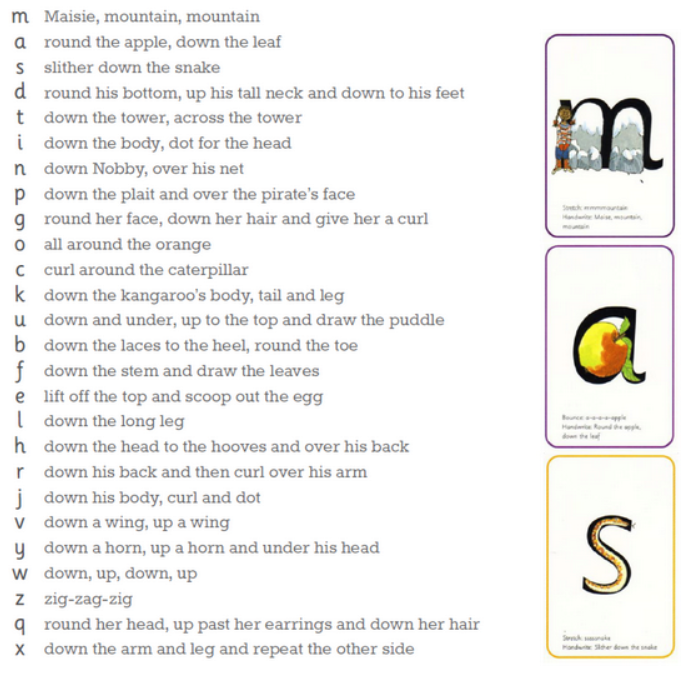
Set 1 Sounds
Set 1 sounds are taught in the following order together with rhymes to help children form the letters correctly and instantly recognise sounds ready for blending. We do not use letter names at this stage.
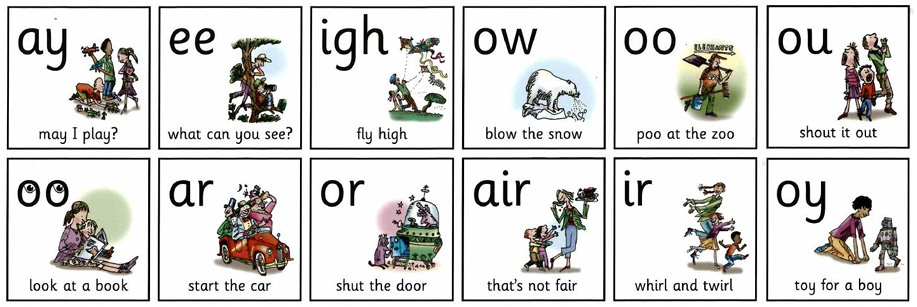
Set 2 Sounds
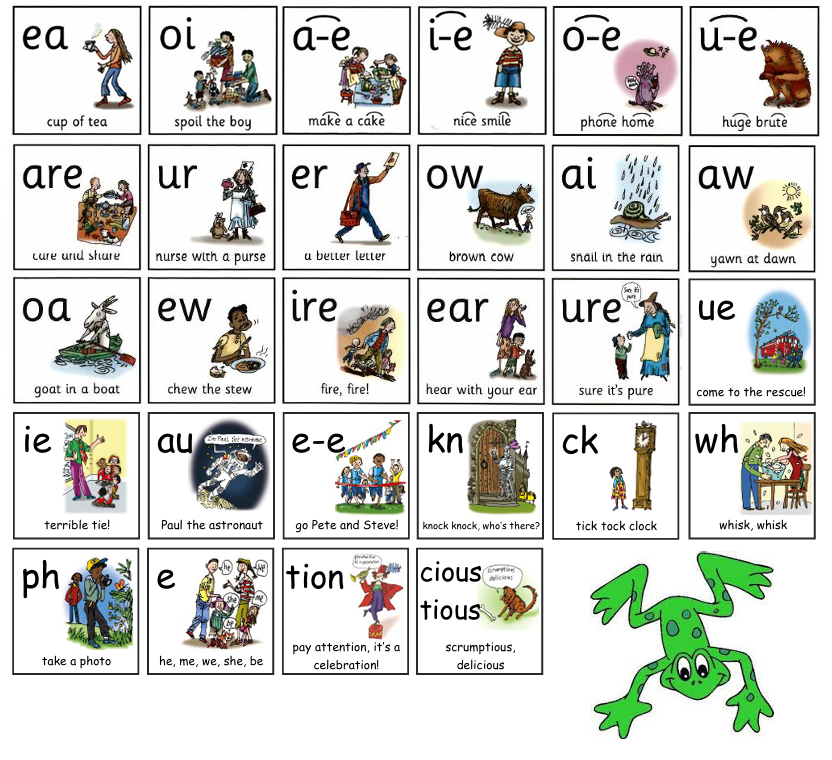
Set 3 Sounds
Key Read Write Inc. Terminology
Fred talk: We use pure sounds (‘m’ not’ muh’,’s’ not ‘suh’, etc.) so that your child will be able to blend the sounds into words more easily.
The following video is an example of how to pronounce the sounds correctly.
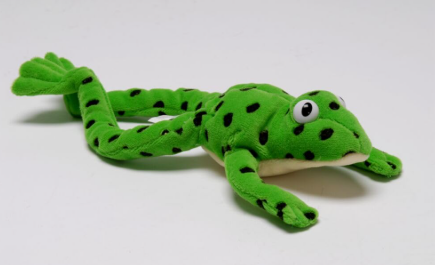
At school we use a toy frog called Fred who is an expert on sounding out words! We call it, ‘Fred Talk’. E.g. m-o-p, c-a-t, m-a-n, sh-o-p, b-l-a-ck.
Green Words:
Green words are words that can be sounded out and then blended together, for example sh–o–p → shop. These words are fully decodable and children use Fred Talk to read them.
Red Words:
Red words are words that cannot be sounded out using phonics. These words are taught explicitly and children are encouraged to recognise them on sight, for example the. We remind children: “You can’t Fred a red!”
Fred Fingers:
Fred Fingers are used to support spelling. Children say the word aloud, identify the number of sounds, and hold up one finger for each sound. For example, p–l–ay has three sounds, so three fingers are held up. Children then pinch each sound on their fingers before writing the word.
Assessment
Children are assessed every half term, or sooner if needed. Children are then grouped according to their phonic knowledge and fluency. Children are well supported as they are taught in small groups by teachers and teaching assistants who have all been trained to deliver the Read Write Inc. programme.
Helpful websites
Ruth Miskin website for video tutorials: https://ruthmiskin.com/en/find-out more/parents/
ICT games for phonics activities: http://ictgames.com/literacy.html
Phonics Play for phonics games: https://www.phonicsplay.co.uk
Oxford Owl for free eBooks: https://home.oxfordowl.co.uk/
Reading at home - Book Bag Books
We ask parents to hear their child read their reading book at least three times each week.
- First read: Focus on decoding the words and using phonics strategies to read accurately.
- Second read: Focus on fluency by encouraging your child to read smoothly, accurately and with expression.
- Third read: Develop comprehension by talking about the story. Ask questions about what has happened, why characters acted in certain ways, how characters are feeling, or what might happen next.
Reading the same book several times helps children build confidence, improve their fluency and develop a deeper understanding of what they read.
Snuggle up Books
Your child will also bring home 'Snuggle Up' books. These books are sent home to encourage children to snuggle up with you and a favourite cuddly toy and simply enjoy sharing a story.
These books are not matched to your child's reading ability. The aim is for you to read the story to your child or for them to use the pictures to help tell the story in their own words.
Your child may also choose to read or retell the story to siblings, family members or even their favourite cuddly toys throughout the week.